NES DATA

Author name: admin_nes

Cloud Migration
Cloud Services

5 Signs Your Business Is Ready for Cloud Migration

Is your legacy IT infrastructure holding back business growth? Between unpredictable server maintenance costs and distributed teams struggling with access, on-premises systems can quickly shift from a reliable asset to an operational bottleneck. Cloud migration offers unmatched scalability and operational efficiency if your organization is truly prepared for the transition. Before making the move, look for these 5 critical signs that your business is ready to migrate to the cloud. Is Your Business Ready for Cloud Migration? 1. Your IT Infrastructure Is Becoming Difficult to Scale One of the clearest signs that your business may be ready for cloud migration is when your existing infrastructure struggles to keep up with growth. With business expansion, you may need additional servers, storage, computing resources, applications, or network capacity. With traditional infrastructure, scaling often means purchasing and installing additional hardware, allocating physical space, and managing increased maintenance requirements. The cloud provides a different approach. Resources can be scaled according to business requirements, allowing organisations to accommodate changing workloads without constantly investing in physical infrastructure. For businesses experiencing rapid growth, seasonal demand, new projects, or expansion into new locations, cloud migration can provide greater flexibility. Instead of buying extra hardware for today, you get a flexible system that grows right alongside your business. 2. Your IT Costs Are Becoming Harder to Predict Managing physical infrastructure involves more than the initial cost of purchasing servers and other hardware. Businesses also need to account for maintenance, upgrades, power, cooling, software licensing, security, and IT personnel. Over time, these expenses can make IT budgets increasingly difficult to predict. Cloud migration can help businesses move toward a more flexible infrastructure model. Depending on the cloud environment and workloads involved, organisations can allocate resources based on their actual requirements rather than maintaining excess physical capacity. This does not automatically mean that moving to the cloud will reduce costs. Poorly planned migrations can create unnecessary expenses. However, with the right architecture, monitoring, and resource management, businesses can gain greater visibility and control over infrastructure spending. This is also where cloud migration consulting can be valuable. A structured assessment can help identify which workloads should move to the cloud, which should remain on-premises, and where optimisation opportunities exist. 3. Your Teams Are Spending Too Much Time Managing Infrastructure Your IT team should be focused on enabling business growth, improving systems, and supporting employees, not constantly dealing with hardware maintenance and infrastructure issues. If your team regularly spends time managing server upgrades, storage limitations, backups, hardware failures, patches, or infrastructure availability, it may be a sign that your current environment is consuming too many resources. Cloud platforms can shift many infrastructure management responsibilities away from internal teams, depending on the services and architecture selected. This can allow technical teams to focus more on strategic initiatives while reducing some of the operational workload associated with maintaining physical infrastructure. However, migration itself requires planning. Businesses need to evaluate applications, dependencies, security requirements, data, compliance considerations, and performance expectations before moving workloads. Working with experienced cloud service providers can help businesses create a structured migration roadmap instead of attempting to move everything at once. 4. Remote Work and Distributed Teams Are Creating Access Challenges Modern businesses are increasingly distributed. Employees may work from offices, homes, client locations, or different cities and countries. If your applications and data are primarily dependent on a physical office or internal network, providing reliable access to distributed teams can become challenging. Cloud-based environments can make it easier to provide authorised users with access to applications and data from different locations, subject to appropriate identity, access, and security controls. This can be particularly useful for organisations with multiple offices, remote employees, travelling teams, or geographically distributed operations. At the same time, businesses need to consider security carefully. Moving workloads to the cloud does not eliminate cybersecurity risks. Identity management, access controls, encryption, monitoring, backup, and compliance should all form part of the migration strategy. A well-planned cloud migration service should therefore consider both accessibility and security rather than treating migration as a simple infrastructure move. 5. Your Existing Infrastructure Is Limiting Business Agility Perhaps the strongest sign that your business is ready for cloud migration is when your infrastructure is starting to limit how quickly you can respond to opportunities. Launching a new application may require weeks of infrastructure preparation. Expanding capacity may involve purchasing new hardware. Setting up systems for a new location may require significant IT coordination. These limitations can slow down business decisions. Cloud infrastructure can provide organisations with greater flexibility to provision resources, test applications, support new workloads, and adapt infrastructure to changing requirements. This can be especially important for businesses undergoing digital transformation. When infrastructure becomes more adaptable, organisations may be able to experiment and respond to changing customer or market requirements more efficiently. Understanding Cloud Migration Challenges While these signs may indicate that your business is ready, migration should not be approached as a simple “move everything to the cloud” exercise. Businesses can encounter several cloud migration challenges, including application compatibility, data transfer, downtime, security, compliance, integration, performance, and unexpected costs. There can also be workloads that are not suitable for immediate migration. Some applications may require significant modernisation, while others may perform better in an on-premises or hybrid environment. This is why assessment should come before migration. A detailed evaluation can help businesses understand their current infrastructure, identify dependencies, classify workloads, estimate costs, and determine the most appropriate migration approach. Choosing the Right Migration Approach There is no single migration strategy that works for every business. Depending on the organisation’s requirements, workloads may be rehosted, replatformed, refactored, replaced, or retained. The right approach depends on factors such as business objectives, application architecture, budget, compliance requirements, performance needs, and long-term IT strategy. When evaluating cloud services, businesses should therefore look beyond the migration itself. The right partner should be able to understand the existing environment, develop a migration roadmap, address risks, and support the organisation throughout the transition. Is Your Business Ready for Cloud

AWS Cost Optimization
Cloud Services

AWS Cost Optimization: How to Reduce Cloud Costs Effectively

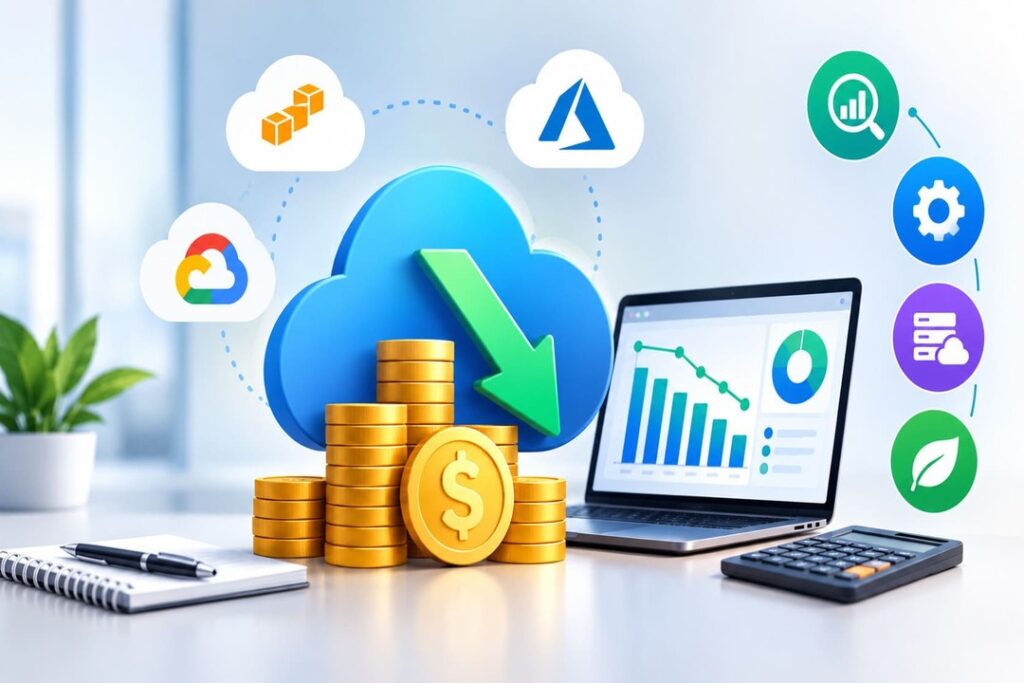
As businesses move more workloads to the cloud, AWS can provide the flexibility and scalability needed to support growth. However, cloud costs can increase quickly when resources are not properly monitored or managed. Unused infrastructure, overprovisioned resources, and inefficient storage can all contribute to unnecessary spending. AWS cost optimization helps businesses gain better control over their cloud environment by aligning infrastructure and spending with actual business requirements. The goal is not simply to reduce costs, but to use AWS resources more efficiently without affecting performance, security, or scalability. What Is AWS Cost Optimization? AWS cost optimization is the process of managing AWS infrastructure and usage to achieve the best value from cloud spending. It involves understanding where money is being spent, identifying inefficient resources, and making informed decisions about infrastructure and pricing. Effective optimization can include rightsizing computing resources, removing unused infrastructure, improving storage management, and selecting suitable AWS pricing models. It is also an ongoing process, as workloads and business requirements change over time. Why Do AWS Costs Increase Over Time? AWS environments often become more complex as businesses scale. Without regular monitoring, resources that were necessary during one stage of growth may continue running even when they are no longer needed. Common reasons for increasing AWS costs include: Overprovisioned computing resources Idle or unused instances and services Rapid growth in data and storage requirements Inefficient data transfer Workloads that are not matched to appropriate pricing models Limited visibility into cloud usage and spending Identifying these issues early can help businesses prevent unnecessary cloud expenditure from becoming a long-term operational cost. Key Strategies for Effective AWS Cost Optimization Businesses can take several practical steps to improve AWS cost efficiency. 1. Rightsize Your Resources AWS resources should match actual workload requirements. Running instances with significantly more capacity than needed can result in unnecessary spending. Regularly reviewing CPU, memory, storage, and network utilization can help identify opportunities to rightsize infrastructure. 2. Eliminate Unused Resources Development environments, unused instances, unattached storage volumes, outdated snapshots, and other resources can continue generating costs even when they are no longer required. Regular resource reviews can help identify and remove these sources of waste. 3. Use the Right Pricing Models AWS offers different pricing options for different workload patterns. Businesses with predictable workloads may benefit from options such as Reserved Instances or Savings Plans, while flexible or short-term workloads may require a different approach. Choosing based on actual usage patterns can improve cost efficiency. 4. Optimize Storage As business data grows, storage can become a significant part of cloud expenditure. Reviewing storage usage, lifecycle policies, and data retention requirements can help businesses avoid paying for data that does not need to remain in higher-cost storage tiers. 5. Monitor Costs Continuously Cost optimization should not be a one-time exercise. AWS cost monitoring and reporting tools can help businesses understand spending patterns, identify unexpected changes, and make adjustments as workloads evolve. How AWS Cloud Migration Services Can Support Cost Optimization Cloud migration is an opportunity to optimize infrastructure from the beginning. Simply moving existing workloads to AWS without reviewing their architecture can result in carrying inefficient configurations into the new environment. Professional AWS cloud migration services can help businesses assess existing infrastructure, understand workload requirements, plan the migration, and determine which AWS resources are appropriate for each application. A well-planned migration can therefore address both technical requirements and long-term cost considerations. This is particularly important when businesses are moving from on-premises infrastructure to a cloud environment for the first time. Migration planning can help establish a more efficient foundation before workloads begin scaling. Choosing the Right AWS Cloud Services in India For businesses evaluating AWS cloud services in India, choosing the right implementation and support partner can be as important as choosing the technology itself. An experienced AWS partner can help businesses evaluate their existing infrastructure, select suitable AWS services, manage migration requirements, and continuously review cloud usage. For growing organizations, this can provide a more structured approach to managing both performance and cloud expenditure. The right approach should focus on the business’s actual workload, growth plans, security requirements, and operational needs rather than adopting cloud resources simply because they are available. Optimize Your AWS Environment Before You Scale AWS can provide businesses with the flexibility to scale quickly, but that flexibility needs to be supported by disciplined cloud management. AWS cost optimization helps organizations understand their usage, eliminate unnecessary spending, and align infrastructure with changing business requirements. Whether a business is already running workloads on AWS or preparing for migration, reviewing its cloud environment regularly can help create a more efficient and sustainable infrastructure. For organizations looking to assess their AWS environment, plan a migration, or improve cloud efficiency, NES Data can help build a cloud strategy aligned with their technical and business requirements. FAQs 1. What is AWS cost optimization? AWS cost optimization is the process of managing AWS resources and usage to reduce unnecessary cloud spending while maintaining performance, security, and scalability. 2. How can businesses reduce AWS costs? Businesses can reduce AWS costs by rightsizing resources, removing unused infrastructure, optimizing storage, selecting suitable pricing models, and regularly monitoring cloud usage. 3. How do AWS cloud migration services help with cost optimization? AWS cloud migration services can help businesses assess existing workloads, identify inefficient infrastructure, and design a more suitable AWS environment before migration. 4. What AWS cloud services are available for businesses in India? Businesses in India can use AWS cloud services across computing, storage, databases, networking, security, analytics, and other areas. The right services depend on workload and business requirements. 5. Is AWS cost optimization a one-time process? No. AWS cost optimization is an ongoing process. As workloads, usage patterns, and business requirements change, infrastructure and spending should be reviewed and adjusted accordingly.

Cloud Services
Cloud Services

Seven Essential Cloud Services Every Modern Business Should Consider

Cloud computing has become the backbone of modern business operations. From startups building their first applications to enterprises modernizing legacy systems, organizations across industries are turning to the cloud for greater flexibility, scalability, and innovation. However, moving to the cloud is only the first step. Long-term success depends on how effectively businesses leverage the right cloud services to manage, secure, optimize, and scale their cloud environments. Without the right strategy, organizations may face security vulnerabilities, rising operational costs, inefficient deployments, and unexpected downtime. This is where comprehensive cloud services play a critical role. Rather than treating cloud adoption as a one-time project, businesses need an end-to-end approach that supports every stage of their cloud journey. In this blog, we’ll explore six essential cloud services that help organizations build secure, resilient, and high-performing cloud environments while maximizing the value of their cloud investments. 1. Cloud Migration: Building a Strong Foundation Every successful cloud journey begins with migration. Whether you’re moving applications, databases, virtual machines, or entire workloads, cloud migration lays the foundation for future growth. A well-planned migration goes beyond simply transferring data from on-premises infrastructure to the cloud. It involves assessing existing environments, selecting the right cloud architecture, minimizing downtime, and ensuring business continuity throughout the transition. Businesses typically choose cloud migration to: Reduce dependence on expensive on-premises infrastructure Improve scalability as business demands change Increase application availability and reliability Enable remote access and collaboration Modernize legacy applications Migration strategies may vary depending on business objectives. Some organizations opt for a lift-and-shift approach for faster deployment, while others choose to modernize applications to take full advantage of cloud-native capabilities. The right migration strategy minimizes operational disruptions while preparing the organization for long-term digital transformation. 2. Security & Compliance: Protecting Your Cloud Environment As organizations move critical workloads to the cloud, security becomes more important than ever. While cloud providers secure the underlying infrastructure, businesses remain responsible for protecting their applications, identities, workloads, and data. An effective cloud security strategy focuses on prevention, monitoring, and continuous improvement. Key components include: Identity and Access Management (IAM) Multi-factor authentication Data encryption Network security Continuous monitoring Threat detection Vulnerability assessments Compliance is equally important, particularly for industries such as healthcare, banking, financial services, manufacturing, and government organizations that operate under strict regulatory requirements. Building security into cloud environments from the beginning helps organizations reduce risks, protect sensitive information, maintain customer trust, and meet industry-specific compliance standards. Rather than treating security as an afterthought, successful organizations integrate it into every stage of their cloud lifecycle. 3. FinOps: Optimizing Cloud Costs Without Compromising Performance One of the biggest misconceptions about cloud computing is that it automatically reduces costs. While cloud platforms eliminate the need for significant upfront infrastructure investments, unmanaged cloud environments can quickly become expensive. Unused resources, oversized virtual machines, idle storage, and inefficient workloads often contribute to unnecessary spending. FinOps, or Cloud Financial Operations, helps organizations gain visibility into cloud usage and optimize spending while maintaining performance. A FinOps strategy typically includes: Monitoring cloud consumption Rightsizing compute resources Identifying idle or underutilized infrastructure Budget forecasting Cost allocation across teams and projects Continuous optimization Instead of simply cutting costs, FinOps encourages smarter cloud investments by aligning technology decisions with business objectives. With improved financial visibility, organizations can scale confidently while ensuring every cloud resource delivers measurable business value. 4. DevOps & Automation: Accelerating Innovation Speed has become a competitive advantage in today’s digital economy. Businesses need to release new features faster, resolve issues quickly, and maintain high application reliability. DevOps bridges the gap between development and operations by promoting collaboration, automation, and continuous delivery. Combined with cloud technologies, DevOps enables organizations to build, test, and deploy applications more efficiently. Core DevOps practices include: Continuous Integration (CI) Continuous Delivery (CD) Infrastructure as Code (IaC) Automated testing Configuration management Monitoring and observability Automation reduces repetitive manual tasks, minimizes deployment errors, and improves consistency across environments. As businesses scale their applications, DevOps helps shorten release cycles, improve software quality, and enable teams to respond more quickly to changing market demands. 5. Disaster Recovery: Ensuring Business Continuity Unexpected disruptions can occur at any time. Cyberattacks, hardware failures, natural disasters, power outages, or accidental data deletion can significantly impact business operations. Without a reliable disaster recovery strategy, downtime can result in financial losses, operational delays, and damage to customer trust. Cloud-based disaster recovery solutions help organizations prepare for these situations by ensuring critical systems can be restored quickly. An effective disaster recovery strategy includes: Automated backups Data replication Failover capabilities Recovery planning Recovery Time Objectives (RTO) Recovery Point Objectives (RPO) Regular testing and validation Modern cloud platforms make disaster recovery more efficient by enabling geographically distributed backups and rapid infrastructure recovery. Rather than reacting to failures after they occur, organizations can build resilient environments that minimize disruption and maintain business continuity. 6. AI/ML Cloud: Enabling the Next Generation of Innovation Artificial Intelligence and Machine Learning are transforming how organizations analyze data, automate processes, and deliver better customer experiences. However, AI workloads require specialized cloud infrastructure capable of handling massive datasets, intensive computations, and scalable processing requirements. AI/ML cloud services provide businesses with the infrastructure needed to build, train, deploy, and manage intelligent applications. These environments support: High-performance computing GPU-enabled infrastructure Scalable storage Data processing pipelines Model deployment MLOps workflows Secure AI environments Organizations across healthcare, manufacturing, finance, retail, education, and technology are increasingly leveraging AI to improve efficiency, automate decision-making, and uncover actionable insights. With the right cloud foundation, businesses can accelerate AI adoption without investing heavily in specialized on-premises hardware. 7. AWS Services: Accelerating Cloud Transformation Amazon Web Services (AWS) is one of the world’s most widely adopted cloud platforms, enabling businesses to build, deploy, and scale applications with greater agility, security, and reliability. Whether you’re migrating workloads, modernizing applications, or building cloud-native solutions, AWS provides a comprehensive suite of services to support every stage of your cloud journey. AWS services help businesses with: Cloud architecture and consulting Application and workload migration Compute and storage solutions Networking and

Colocation Services

What is Managed Colocation Understanding the Benefits

As enterprises modernize their IT environments to support cloud, AI, real-time analytics, and high-availability applications, the limitations of traditional on-premise infrastructure are becoming increasingly evident. While public cloud adoption continues to grow, many organizations still require the control, performance, compliance, and security of dedicated infrastructure. This is where managed colocation emerges as a strategic solution, combining the ownership of hardware with expert-led operations inside a carrier-neutral, high-availability data center. Understanding What is Managed Colocation Managed colocation is a data center service model in which businesses place their servers and IT equipment within a third-party facility while the provider manages the day-to-day operations, monitoring, maintenance, and support. It goes beyond traditional server colocation, where the responsibility for managing infrastructure remains with the enterprise. In simple terms: You own the infrastructure The provider runs and maintains it for you This hybrid approach delivers the control of dedicated environments with the operational simplicity of a fully managed solution. Why Managed Colocation is Gaining Adoption For CIOs, CTOs, and IT leaders, infrastructure decisions are no longer just technical. They are business-critical. Managed colocation addresses key enterprise challenges: Rising operational complexity 24×7 uptime expectations Shortage of skilled infrastructure teams Cost pressures on captive data centers Hybrid and multi-cloud integration It enables organizations to focus on applications, innovation, and digital growth while the infrastructure is handled by experts. Key Components and Benefits Expert Management The most defining advantage of managed colocation is access to a skilled, on-site operations team. This typically includes: 24×7 infrastructure monitoring Remote hands support OS and firmware updates Patch management Incident response and troubleshooting Performance reporting This transforms infrastructure from a resource-heavy responsibility into an SLA-driven service model. Infrastructure & Security Managed colocation facilities are purpose-built for mission-critical workloads and offer: Redundant power architecture Advanced cooling systems High-speed, low-latency connectivity Multi-layer physical security Access control and surveillance Compliance-ready environments For sectors like BFSI, fintech, SaaS, and government, this ensures both performance and regulatory readiness. Cost Efficiency Building and operating a captive data center involves: High capital expenditure Real estate and energy costs 24×7 staffing Technology refresh cycles Managed colocation converts this into a predictable OPEX-based model, eliminating: Infrastructure management overhead Spare inventory costs Downtime-related losses The result is a significantly improved total cost of ownership (TCO). Scalability Without Disruption Digital growth is not linear and infrastructure must be able to scale accordingly. Managed colocation allows organizations to: Expand rack space and power density Deploy new servers quickly Support high-density workloads Integrate with cloud environments All without redesigning their operational model. Improved Reliability and Business Continuity High availability is not optional for modern enterprises. With: Proactive monitoring On-site technical expertise Redundant systems SLA-backed uptime Managed colocation ensures faster issue resolution and minimal service disruption. How It Fits into a Managed Services Portfolio For enterprises adopting hybrid IT, managed colocation becomes a foundational layer within a broader managed services portfolio, supporting: Hybrid cloud enablement Disaster recovery environments Edge deployments Backup and archival infrastructure High-performance computing workloads It provides the stability of physical infrastructure with the agility of service-driven operations. Who Should Choose Managed Colocation? This model is ideal for companies that: Require high performance and low latency Operate in regulated industries Want to exit captive data centers Lack 24×7 infrastructure management teams Are building hybrid cloud environments Need predictable infrastructure costs For such organizations, managed colocation is not just a hosting strategy but a business continuity and digital transformation enabler. Why Managed Colocation Matters in a Growing Data Economy As data consumption accelerates, infrastructure must be: Scalable Secure Always available Operationally efficient Managed colocation delivers all four, while allowing enterprises to retain full control over their IT assets. Why Choose NES DATA for Managed Colocation NES DATA delivers enterprise-grade managed colocation designed for high-availability, performance-driven, and compliance-sensitive workloads. With: State-of-the-art data center infrastructure Carrier-neutral connectivity Scalable deployment models 24×7 expert support SLA-backed operations NES DATA enables organizations to transition from infrastructure management to infrastructure advantage. At NES DATA, we understand that though colocation delivers a reliable physical foundation, true resilience comes from expert management of your mission-critical systems. That’s where our managed services portfolio makes the difference, ensuring your infrastructure doesn’t just run, but thrives under constant vigilance. It is not just about hosting servers; it is about building a future-ready digital foundation. Conclusion Managed colocation brings together the best of both worlds: the control of dedicated infrastructure and the efficiency of managed operations. For enterprises navigating hybrid IT, rising data volumes, and mission-critical uptime requirements, it offers: Operational simplicity Financial predictability Enterprise-grade reliability Seamless scalability Most importantly, it allows technology teams to shift their focus from managing infrastructure to driving innovation and business growth. FAQs 1. What is managed colocation? Data center colocation is a service where businesses place & operate their critical IT assets in a third-party data center facility that provides uninterrupted power, cooling, security and connectivity. 2. How is Managed Data Center different from colocation? While colocation provides space and infrastructure, in a Managed Data Center, an add-on service is provided at an additional cost, which includes monitoring, maintenance, and operational hands-on support for your IT environment. 3. When should a business choose Managed Hosting? Managed Hosting is ideal for organizations with a lean internal IT team that want to outsource the monitoring and management of their critical IT assets to an experienced DC or 3rd party service provider 4. What is the most important factor when choosing a colocation provider? Uptime reliability, scalability, ecosystem connectivity, and SLA-backed services support are the most critical factors. 5. How does NES DATA ensure high availability for mission-critical workloads? High availability at NES DATA is achieved through a combination of resilient infrastructure and operational excellence. The facilities are built with redundant power and cooling systems, supported by carrier-neutral connectivity for network reliability. Continuous monitoring, rapid incident response and on-site technical expertise ensure that potential issues are identified and resolved before they impact performance, enabling enterprises to meet strict uptime and business continuity requirements.                   

Data Center Colocation
Colocation Services, Data Centers

How to Choose the Right Data Center Colocation Provider

In today’s always-on digital economy, choosing the right data center colocation partner is no longer a real estate decision; it is a long-term infrastructure strategy. From hybrid cloud enablement to AI-ready compute environments, the colocation facility you select will directly influence performance, resilience, scalability, and operational cost. For enterprises moving beyond on-premise deployments, the evaluation process must go deeper than rack space and power pricing. It requires a structured approach that aligns technical, operational, and business priorities. This guide breaks down the critical factors, cost considerations, and evaluation best practices to help you make a confident, future-ready decision. Key Factors for Choosing a Colocation Provider Location and Facility Design The right location ensures low latency, accessibility, and disaster resilience. Look for: Proximity to business operations and end users Low-risk geography (flood, seismic, power stability) Network-dense ecosystem Ease of physical access for your IT teams A strategically located facility becomes a digital interconnection hub and not just a hosting site. Power and Cooling Reliability Power architecture defines uptime. Evaluate: Redundancy configuration (N+1 / 2N) Dual power feeds UPS and generator backup Power density per rack For high-performance environments such as AI, analytics, and high-frequency applications, cooling design must support high-density deployments. Security Measures and Compliance Your colocation provider becomes the custodian of mission-critical infrastructure. Check for: Multi-layer physical security Biometric access controls 24×7 surveillance and monitoring Compliance with ISO, SOC, PCI, HIPAA (as applicable) This is especially important for BFSI, healthcare, SaaS, and e-commerce workloads. Scalability and Flexibility Your infrastructure requirements will evolve. Choose a provider that offers: Seamless rack-to-cage-to-suite expansion High-density readiness Hybrid and multi-cloud enablement Integration with managed data center services This ensures you do not face costly migrations in the future. Connectivity and Ecosystem Strength Modern colocation is about interconnection. Look for: Carrier neutrality Multiple fiber entry paths Direct cloud on-ramps Internet exchange access A strong ecosystem enables faster digital transformation and lower network latency. Support, SLAs, and Managed Services Capability Colocation is no longer a “space and power” model. Assess: 24×7 remote hands support Defined response and resolution SLAs Migration assistance Availability of Managed Hosting and infrastructure management services This reduces the operational burden on internal IT teams. Total Cost of Ownership (TCO) The lowest rack cost is rarely the most economical option. Understand: Power billing model Cross-connect charges Remote hands costs Contract flexibility Scaling costs A transparent pricing structure helps you forecast long-term infrastructure spend Cost Drivers You Should Never Overlook Many enterprises underestimate: Network cross-connect pricing Power overage charges Migration and deployment cost Hardware lifecycle support A true TCO evaluation aligns cost with performance, uptime, and business continuity. Mistakes to Avoid When Selecting a Colocation Partner Choosing based only on price Ignoring future scalability Overlooking ecosystem connectivity Not validating SLA enforcement history Treating colocation as a short-term decision Colocation is a 7–15 year infrastructure strategy and not a short procurement cycle. Future-Ready Workloads: What to Plan for Today Your provider should be ready for: AI and GPU-intensive environments Edge deployments Hybrid multi-cloud architectures High-density compute Facilities designed for traditional IT loads may not support next-generation digital infrastructure. Best Practices for Evaluating a Provider Evaluate Compliance and Certifications Ensure alignment with your industry’s regulatory framework. Check Operational Track Record Look at uptime history, client portfolio, and expansion roadmap. Perform a Physical Site Inspection Nothing replaces an on-ground audit of: Power rooms Cooling systems Security layers Network infrastructure Ask the Right Questions What happens during a power failure? How is SLA measured and reported? How quickly can I scale? What managed services are available? Why the Right Managed Colocation Partner Matters The future of IT infrastructure is not just colocation; it is integrated managed infrastructure. A provider that combines data center colocation, managed data center, and managed hosting capabilities delivers: Lower operational complexity Faster deployment cycles Better performance visibility Stronger business continuity Why NES DATA Is the Right Fit for Your Colocation Strategy If the right colocation partner is defined by uptime assurance, scalability, ecosystem strength, and service-driven operations — NES DATA is built around exactly these outcomes. NES DATA’s facilities are designed, engineered, and operated to give enterprises complete confidence in performance, security, and delivery timelines. From single-rack deployments to multi-megawatt environments, the infrastructure is purpose-built to support core, edge, and hybrid architectures without redesign or relocation. This is a colocation structured for growth and not just occupancy. Agile and ultra-efficient environments that adapt as workloads evolve Enterprise-grade resilience for mission-critical infrastructure High-density, future-ready capacity for next-generation compute Network-rich connectivity that accelerates hybrid and multi-cloud adoption Industry-leading deployment timelines that reduce time to go live Sustainability-led design for long-term cost and energy efficiency With a strong client-first operating model, NES DATA delivers more than space and power; it provides a flexible, service-backed digital foundation that allows IT teams to scale without operational friction. In other words, the evaluation checklist you followed in this guide is the framework on which NES DATA is built, making it not just a provider, but a long-term infrastructure partner. Conclusion Choosing the right data center colocation provider is a strategic decision that impacts your digital agility for the next decade. The ideal partner will not only meet your current infrastructure needs but will also support future workloads, hybrid architectures, and evolving performance demands, while delivering operational simplicity through managed data center and managed hosting services. A structured evaluation today ensures scalability, resilience, and cost efficiency tomorrow. FAQs What is Data Center Colocation? Data center colocation is a service where businesses place their servers and IT infrastructure in a third-party data center facility that provides power, cooling, security, and connectivity. How is Managed Data Center different from colocation? While colocation provides space and infrastructure, a Managed Data Center includes monitoring, maintenance, and operational support for your IT environment. When should a business choose Managed Hosting? Managed Hosting is ideal for organizations that want dedicated infrastructure without managing hardware, OS, and performance internally. What is the most important factor when choosing a colocation provider? Uptime reliability, scalability, ecosystem connectivity, and SLA-backed support

Edge Computing
Data Centers

Why Edge Computing Infrastructure Is Critical for India’s AI and 5G Growth

In today’s fast-evolving digital landscape, edge computing infrastructure is not just a buzzword but a fundamental pillar for India’s future in technology. As Artificial Intelligence (AI), 5G networks, and the Internet of Things (IoT) scale rapidly across industries, traditional centralized cloud computing alone can’t deliver the performance, speed, and responsiveness required. Edge computing changes that by processing data closer to where it’s generated, at the network edge, reducing delays, boosting efficiency, and unlocking new use-cases that are reshaping business and society. What Is Edge Computing Infrastructure? At its core, edge computing infrastructure refers to distributed computing resources, such as servers, storage and networking, positioned physically closer to end users and devices rather than in far-away centralized data centers. These edge nodes process and store data locally, significantly reducing the distance data must travel and the time it takes to act on it. Modern edge infrastructure often includes AI edge solutions, specialized systems that combine local compute with intelligent analytics to support real-time decision-making for mission-critical applications. In tandem with 5G connectivity, this creates a virtuous tech ecosystem where speed, intelligence, and reliability converge. The Latency Challenge and Why It Matters? One of the biggest constraints on current cloud-centric architectures is latency: the time it takes for data to travel between the source, the cloud, and back. For many applications, even a few extra milliseconds can make the difference between success and failure. 5G technology promises ultra-low latency (often <10ms), but that promise can only be realized when data is processed nearby, instead of being routed to distant cloud centers. Use-cases like autonomous transport, industrial robotics, telemedicine, and remote surveillance demand near-instant responses that only low latency data centers can deliver. This is where edge infrastructure comes into play, by placing compute close to the user, it allows applications to process data in milliseconds rather than seconds. The Synergy Between 5G and Edge The deployment of 5G networks and edge computing infrastructure is deeply interlinked: 5G’s high bandwidth and ultra-fast speeds drive demand for localized compute. Edge data nodes amplify 5G’s real-time capabilities by processing data where it’s generated. This combination, often referred to as 5G edge data center architecture. unlocks powerful new opportunities, such as: Smart factories with robotic automation Real-time analytics in logistics and supply chains Immersive AR/VR applications Remote patient monitoring and telehealth Autonomous vehicles and connected mobility systems According to industry forecasts, the India 5G edge computing market is poised for exponential growth, driven by enterprise adoption and telecom expansion. Unlocking India’s AI Potential with the Edge Artificial Intelligence thrives on data, but how that data is collected, moved, and acted upon determines the success of real-time AI applications.Enter AI edge solutions, which enable heavy AI workloads (especially inference) to run locally. Local AI inference reduces latency and data transfer costs, preserves privacy, and enhances reliability, all critical factors for edge-driven innovation. This is vital for scenarios like facial recognition, predictive maintenance, and on-device analytics where every millisecond counts. Edge computing also eases bandwidth pressure on core networks by filtering and processing data locally before sending only the most essential insights upstream. India’s Unique Edge Opportunity India’s digital transformation journey, across smart cities, digital governance, e-commerce, and enterprise digitalization, has created a massive appetite for low-latency, high-performance computing close to users. This is especially true given India’s demographic diversity and the rapid expansion of mobile internet adoption. Here’s why edge infrastructure holds strategic value for India: Tier-2 and Tier-3 growth: Decentralized edge nodes enable digital services outside metropolitan centers, improving performance and inclusion. 5G readiness: Edge architecture is essential to realize 5G’s sub-millisecond responsiveness. AI expansion: Localized compute enables scalable, real-time AI adoption across sectors. Cost & bandwidth optimization: Reducing unnecessary data transfer reduces network load and total cost of ownership. Together, these trends are transforming India’s tech ecosystem into a dynamic, resilient, and future-ready digital economy. The Future of Edge: A Distributed Data Reality Looking ahead, the edge is not just a support technology; it is becoming the foundation for a distributed digital infrastructure. Edge + AI + 5G = Real-Time Infrastructure: Localized processing will become the norm for real-time services, not just a luxury. Scalable Edge Ecosystems: Modular, scalable edge nodes will support diverse industries, from manufacturing and healthcare to entertainment and public safety. Edge Intelligence: The lines between edge compute, AI algorithms, and network optimization will blur, enabling self-learning, self-healing systems. In this future, low latency data centers won’t just serve apps; they will orchestrate smart systems where decisions are immediate, context-aware, and adaptive. Why Data Center Colocation Still Matters While edge computing brings processing closer to users, data center colocation continues to play a vital role. Colocation facilities provide secure, highly connected, and resilient environments where enterprises can house their infrastructure, including edge nodes, while leveraging carrier neutrality, access to multiple network partners, and scalable power and cooling. Today’s forward-looking IT teams often adopt hybrid strategies, combining centralized cloud, colocation, and distributed edge deployments, to balance performance, security, cost, and operational control. NES DATA: Enabling India’s Edge-Powered Future At a time when digital services define national competitiveness, NES DATA is positioned as a trusted partner in building resilient, agile, and AI-ready infrastructure solutions. Our offerings bridge the gap between centralized compute power and edge requirements, from colocation environments to edge data center implementations that support low-latency workloads and 5G-enabled applications. By combining deep expertise with tomorrow-ready technologies, NES DATA helps enterprises unlock real-time insights, accelerated performance, and seamless scalability, powering India’s journey toward an AI-driven, low-latency digital future. Frequently Asked Questions (FAQs) 1. What exactly is edge computing infrastructure? Edge computing infrastructure consists of distributed compute, storage, and networking resources located near users and devices to process data locally, reducing latency and improving responsiveness. 2. How does edge computing help 5G networks? Edge infrastructure brings computing closer to users, allowing 5G networks to deliver on their low-latency, high-bandwidth promises for real-time services. 3. Why is edge important for AI applications? AI workloads, especially inference, require real-time data processing. Edge computing enables faster

Data Center
Data Centers

Union Budget’s Vision: Data Center India for Global AI

India is steadily carving a path toward becoming a global technology powerhouse, and the Union Budget 2026-27 signals a significant acceleration of this journey. At the heart of this vision lies Data Center India – a term that now represents more than physical infrastructure. It embodies India’s ambition to become a trusted global hub for artificial intelligence (AI) and cloud-based services. With AI emerging as a transformative force across sectors, the government’s policy measures in this year’s budget aim to catalyze the development of a robust data center ecosystem while driving domestic and foreign investment. AI’s Demand for Data Center Infrastructure Artificial intelligence is not just a software innovation; it is infrastructure-intensive. Large-scale AI models, real-time analytics, and high-performance computing all depend on high-efficiency data centers capable of handling massive volumes of data. India’s AI ambitions are intertwined with the growth of AI Data Centers that meet global standards in reliability, security, and sustainability. As AI adoption expands across sectors like healthcare, finance, manufacturing, and education, the demand for scalable data center infrastructure is set to rise exponentially. The Union Budget 2026 recognizes this intersection of AI and infrastructure. The government has articulated a clear vision: India should become not only a consumer of AI but a global provider of AI-enabled solutions. Achieving this requires nurturing a high-quality domestic data center ecosystem that can meet international benchmarks for efficiency, uptime, and compliance. Tax Concessions: A Strategic Incentive One of the most significant measures announced in this year’s budget is the tax holiday extended to foreign cloud service providers establishing data centers in India until 2047. By offering long-term certainty on taxation, the government is sending a strong signal to global cloud players about India’s readiness to host critical workloads. These tax concessions are contingent upon foreign cloud companies providing services to Indian customers through locally incorporated reseller entities. This approach simultaneously promotes data sovereignty and ensures that the economic benefits of cloud adoption such as jobs, taxation and skill development, remain in India. The policy is expected to attract substantial foreign investment into AI Data Centers, directly supporting India’s AI adoption roadmap. 15% Safe Harbour: Reducing Risk for Indian Operators In addition to tax holidays for foreign investors, the budget introduces a 15% safe harbour on costs for data center services operated through related entities. This measure reduces uncertainty in taxation, providing Indian operators with a predictable financial environment. By mitigating risks, this safe harbour is likely to encourage operators to expand capacity, adopt advanced technologies, and offer competitive cloud services to both domestic and international clients. The combination of tax concessions and safe harbour provisions strengthens India’s positioning as a global hub for AI and cloud infrastructure. By reducing operating costs and increasing financial predictability, the government is facilitating a fivefold increase in data center capacity by 2030 — a goal that aligns with India’s AI ambitions. Implications for Cloud Services and Cloud Service Models The budget’s measures have significant implications for the broader cloud services ecosystem. By incentivizing foreign cloud providers to establish operations locally, India can expand access to global-grade infrastructure for enterprises of all sizes. This fosters competition and innovation across different cloud service models, including Infrastructure as a Service (IaaS), Platform as a Service (PaaS), and Software as a Service (SaaS). For businesses, this means faster deployment of AI workloads, lower latency, and enhanced data security. For startups and innovators, the policy lowers barriers to entry, providing access to scalable, reliable computing resources without requiring heavy upfront capital expenditure. Overall, the budget sets the stage for a vibrant cloud ecosystem that is both globally competitive and domestically empowering. Aligning Infrastructure with Employment and Skill Development The government has also highlighted the employment and skill development potential of the data center ecosystem. Hon’ble Prime Minister Narendra Modi remarked that the budget would give a “significant boost to employment generation,” particularly for youth engaged in high-tech operations, maintenance, and AI development. This policy focus ensures that India’s transition into a global AI hub is inclusive, with opportunities extending beyond urban centers to emerging tech corridors across the country. By linking tax incentives with local employment and operational requirements, the Union Budget 2026 creates a framework where economic, technological, and social objectives reinforce each other. Data centers are no longer just physical spaces; they are engines of innovation, job creation, and global competitiveness. Strategic Outlook: India as a Global AI Data Hub Taken together, these policy measures signal India’s intent to become a global player in AI and cloud infrastructure. The tax concessions and safe harbour policies provide a stable foundation for foreign investment, while local employment and skill development initiatives ensure that growth is sustainable and inclusive. As the country aims for a fivefold expansion of data center India capacity by 2030, the infrastructure created today will serve as the backbone for AI-driven industries of tomorrow. From advanced AI computation to real-time analytics and cloud-native applications, India is positioning itself to serve a global clientele, supporting both domestic innovation and international competitiveness. NES DATA: Enabling the Vision At the forefront of this transformation, organizations like NES DATA are playing a critical role in operationalizing this vision. NES DATA’s colocation services offer enterprises and cloud providers a reliable, scalable platform for hosting AI workloads, adhering to the highest standards of performance and compliance. By providing end-to-end infrastructure solutions across diverse cloud service models, it enables businesses to leverage India’s growing data center ecosystem while aligning with the government’s AI and cloud initiatives. As India steps onto the global AI stage, NES DATA emerges as a strategic partner, bridging global standards with local excellence. In doing so, it helps build a future-ready AI data center ecosystem: robust, innovative, and globally competitive. FAQs 1. What is Data Center India and why is it critical for AI growth? Data Center India refers to the growing network of high-performance, secure, and scalable data centers across India. These facilities are critical for supporting AI workloads, cloud-based applications, and enterprise data storage. With

Colocation Services

Why AI Workloads Depend on Colocation Services

Artificial Intelligence is no longer experimental. It is operational, revenue-generating, and infrastructure-hungry. From generative AI models to predictive analytics engines and real-time automation systems, AI workloads are pushing the limits of traditional IT environments. This is precisely why Colocation services have become foundational to modern AI deployments. Enterprises building AI capabilities today and planning for exponential growth tomorrow are discovering that colocation environments provide the power density, cooling resilience, and network performance AI demands. As AI continues to evolve, the infrastructure supporting it must grow even faster. And that evolution is increasingly happening inside scalable, carrier-neutral, high-density data center ecosystems. The Infrastructure Demands of Modern AI AI workloads are fundamentally different from conventional enterprise applications. They require: Massive compute density (GPU-heavy clusters) High-performance networking with ultra-low latency Continuous availability with zero tolerance for downtime Large-scale data ingestion and processing Flexible capacity expansion Training large language models, for example, requires thousands of GPUs operating in parallel. Inference engines handling real-time recommendations or computer vision workloads require consistent performance and predictable latency. Traditional on-premise environments struggle to support these demands due to limitations in power availability, cooling capacity, and physical scalability. This is where Colocation services create strategic value. They provide enterprise-grade infrastructure without forcing organizations to build and maintain their own high-density data centers. AI Storage Infrastructure: The Backbone of Intelligent Systems AI models are only as effective as the data they are trained on. Modern AI ecosystems rely on robust AI storage infrastructure capable of handling: Petabytes of structured and unstructured data High-speed data access for model training Real-time data ingestion pipelines Seamless integration with cloud environments Unlike traditional storage systems, AI storage environments must support parallel processing, rapid data retrieval, and high throughput. Storage bottlenecks can stall GPU clusters, wasting compute resources and increasing operational costs. Colocation facilities offer the physical and network architecture necessary to host high-performance storage arrays and distributed storage clusters. With redundant connectivity, multi-carrier ecosystems, and direct cloud on-ramps, they ensure AI storage systems remain accessible, scalable, and resilient. As AI applications expand from healthcare diagnostics to fintech fraud detection, the demand for advanced storage infrastructure will only intensify. Enterprises need environments designed for sustained, data-intensive workloads, not retrofitted server rooms. Scalable Data Centers for AI Growth AI growth is not linear. It is exponential. A pilot AI project might begin with a few GPU servers. Within months, it can evolve into multi-rack clusters requiring megawatts of power and advanced liquid cooling solutions. Organizations that underestimate this growth often face infrastructure constraints that delay innovation. Scalable data centers address this challenge by offering: High power density racks Flexible expansion capacity Modular deployment models Advanced cooling technologies Structured cable management for high-speed networking Colocation environments are engineered for incremental scaling. Enterprises can expand from a single rack to a dedicated cage or private suite without relocating infrastructure. This agility becomes critical as AI models become larger, more complex, and more data-intensive. Looking ahead, as AI applications integrate edge processing, real-time analytics, and autonomous systems, scalable infrastructure will be non-negotiable. Businesses need environments that support future expansion without requiring disruptive migrations. Why Building In-House Is Increasingly Unsustainable Constructing an AI-ready data center internally requires: Significant capital expenditure Long approval and construction timelines Expertise in high-density cooling and power engineering Ongoing operational management For many organizations, this approach introduces risk. Infrastructure can become obsolete within years as AI hardware evolves rapidly. Additionally, securing uninterrupted power, redundancy, and multi-carrier connectivity requires complex engineering and regulatory coordination. Colocation services mitigate these risks by providing ready-built environments optimized for performance and uptime. Enterprises retain full control over their hardware while benefiting from professionally managed facilities. In a future where AI adoption accelerates across industries, agility will determine competitiveness. Infrastructure delays can directly impact market positioning. Network Density and AI Performance AI training clusters depend heavily on high-speed interconnects. East-west traffic between GPUs, access to cloud storage, and real-time data exchange require ultra-low latency networking. Colocation facilities provide dense carrier ecosystems and direct connectivity to hyperscalers. This proximity reduces latency and improves data transfer speeds. It also supports hybrid architectures where AI training occurs in dedicated hardware while additional workloads leverage cloud elasticity. As AI expands into autonomous systems, IoT-driven analytics, and smart infrastructure, network proximity will become even more critical. Data must move faster than ever before, and infrastructure must keep pace. Energy Efficiency and Sustainability AI workloads are energy-intensive. Power consumption can scale dramatically as GPU clusters expand. Organizations must balance performance with sustainability goals. Modern colocation facilities invest in: Energy-efficient cooling systems Renewable energy sourcing Optimized airflow and containment strategies Advanced monitoring systems This enables enterprises to operate AI environments responsibly while maintaining performance standards. In the coming years, regulatory pressures and ESG commitments will make energy-efficient infrastructure a strategic requirement, not a preference. Security and Operational Resilience AI workloads often process sensitive data such as financial records, medical images and proprietary algorithms. Protecting this data requires robust physical and digital security measures. Colocation environments provide: Multi-layer physical security Redundant power and network paths 24/7 monitoring and facility management Disaster recovery readiness As AI becomes embedded in mission-critical operations, downtime or breaches will carry significant financial and reputational consequences. Infrastructure resilience becomes foundational to AI success. The Future: AI-Native Infrastructure We are entering an era where infrastructure is no longer passive support; it is a competitive differentiator. AI-driven industries will require environments engineered specifically for high-density computing, rapid scalability, and sustainable operations. Colocation ecosystems are evolving to support liquid cooling, higher rack densities, AI clusters, and hybrid cloud integration. They are becoming AI-native environments rather than generic hosting facilities. Organizations that align their infrastructure strategy with AI growth today will be better positioned to innovate tomorrow. NES DATA: Enabling Intelligent Infrastructure At NES DATA, we understand that AI workloads demand more than space and power. They demand precision, resilience, and future-ready architecture. As a trusted provider of colocation services, NES DATA delivers secure, high-performance and scalable environments designed to support evolving AI storage infrastructure and next-generation scalable data

Data Center
Colocation Solutions

Colocation Data Center What It Is How It Works and Why It Matters

As AI reshapes the data world into a high-velocity, high-density ecosystem, colocation data center becomes the physical backbone that makes this transformation viable at scale. Enterprises today are generating, processing and moving more data than ever before. AI models, real-time analytics, digital platforms and mission-critical applications are pushing traditional IT infrastructure beyond its limits. In this environment, terms like colocation, colocation services are often discussed, but not always clearly understood. So what is colocation data center? How does it work? And why has it become such a critical part of modern enterprise infrastructure? This blog breaks it down clearly, practically and in the context of today’s AI-driven data world. What Is Colocation Data Center? A colocation data center is a professionally managed facility where businesses place their own servers, storage and networking equipment, while the data center provider supplies the physical space, power, cooling, security and connectivity. Instead of building and operating their own data center, enterprises “co-locate” their IT infrastructure inside a shared, purpose-built environment designed for reliability and performance. How colocation differs from other models On-premise data centers require high capital investment, long build timelines and in-house operational expertise. Public cloud offers scalability but may limit control, predictability or compliance for certain workloads. Colocation sits between the two, offering physical control over infrastructure with enterprise-grade facilities and operational resilience. In simple terms, colocation allows organizations to focus on their applications and data while offloading the complexity of running a data center. How Does a Colocation Data Center Work? Colocation data centers operate on a shared-infrastructure model, designed to support multiple enterprises securely and efficiently. Here’s how it typically works: Space allocation Customers lease space based on their needs. This can be ranging from individual racks to private cages or dedicated suites. Power infrastructure The facility provides redundant power feeds, UPS systems and backup generators to ensure continuous availability even during grid failures. Cooling systems Precision cooling systems maintain optimal temperature and humidity, supporting both traditional and high-density workloads. Connectivity and interconnection Colocation facilities offer access to multiple network carriers, internet exchanges and cloud on-ramps, enabling low-latency, high-bandwidth connectivity. Security and operations 24/7 monitoring, access controls, surveillance and compliance frameworks ensure physical and operational security at all times. This model delivers predictable performance, high availability and operational continuity, without the burden of owning and managing the facility itself. Why Colocation Data Centers Matter More Than Ever The relevance of colocation has grown sharply as enterprise workloads evolve. Data volumes and velocity are rising AI, analytics and digital platforms generate continuous data streams that demand reliable, always-on infrastructure. Power and density requirements are increasing Modern workloads, especially AI and compute-intensive applications, require higher rack densities and stable power environments that many legacy data centers cannot support. Latency is now a business metric Applications increasingly depend on proximity to users, clouds and networks. Colocation facilities act as strategic hubs within this ecosystem. Compliance and resilience are non-negotiable Industries such as BFSI, healthcare and digital services require secure, compliant and resilient environments that are difficult to maintain in-house at scale. In short, colocation data centers enable enterprises to scale infrastructure in step with business growth, without compromising performance or control. Colocation vs Cloud vs On-Premise: A Practical Comparison Colocation is not a replacement for cloud or on-premise infrastructure; it complements both. Control: Colocation offers physical control over hardware, unlike public cloud. Scalability: Faster and more flexible than building an on-premise data center. Cost predictability: More stable long-term costs compared to fluctuating cloud usage. Performance: Ideal for latency-sensitive and high-performance workloads. Compliance: Easier to meet data residency and regulatory requirements. Most enterprises today adopt hybrid architectures, where colocation forms the stable core connecting on-premise systems and cloud platforms. Who Uses Colocation Data Centers? Colocation is widely adopted across sectors, including: Financial services: for regulatory compliance and low-latency operations SaaS and digital platforms: for scalable, always-available infrastructure Enterprises running AI and analytics: for high-density, performance-driven workloads Media, gaming and streaming: for bandwidth-intensive applications Industries with sensitive data: requiring secure, controlled environments What unites these use cases is the need for reliability, scalability and operational certainty. Key Benefits of Colocation Data Centers High availability and uptime Scalable infrastructure without capital-heavy builds Enterprise-grade physical and operational security Rich network ecosystems and cloud connectivity Faster deployment and expansion These benefits make colocation a strategic infrastructure decision, not just an IT one. How to Choose the Right Colocation Data Center Provider When evaluating a colocation partner, enterprises should consider: Power capacity and density support Cooling efficiency and future readiness Connectivity options and carrier neutrality Security standards and compliance certifications Flexibility to scale as workloads evolve The right provider should align with both current requirements and long-term infrastructure strategy. NES DATA: Enabling Enterprise-Ready Colocation Infrastructure NES DATA delivers secure, scalable and high-performance colocation data center services designed to support modern enterprise workloads. Beyond providing space and connectivity, NES DATA focuses on creating operationally resilient colocation environments that meet the performance, availability and compliance expectations of today’s data-driven businesses. Its facilities are built to support high-availability infrastructure, diverse network ecosystems and evolving workload requirements without compromising security or reliability. With professionally managed operations, robust physical security and scalable capacity, NES DATA enables enterprises to place critical infrastructure in an environment purpose-built for continuity and growth. This allows organizations to focus on applications, data and innovation while NES DATA ensures the infrastructure foundation remains stable, secure and ready to scale. By combining enterprise-grade colocation services with operational excellence, NES DATA empowers organizations to deploy and run mission-critical workloads with confidence today and into the future. Conclusion Colocation data centers have evolved from simple hosting facilities into critical enablers of the modern digital economy. As AI accelerates data creation and increases infrastructure demands, colocation provides the physical foundation that allows enterprises to scale intelligently, securely and sustainably. Understanding what colocation is and why it matters, is no longer optional. It is a strategic requirement for organizations navigating the future of data-driven business. FAQs 1. What is a colocation data center in

Colocation Services

NES DATA Agile, Ultra Efficient and Scalable Data Center Colocation Services

Enterprise growth is no longer limited by software but is more constrained by infrastructure readiness. As enterprise IT environments become increasingly distributed and performance-sensitive, Data Center Colocation Services are relied upon more heavily to balance control, resilience and scale. Organizations now require infrastructure that can evolve without disrupting operations or increasing operational risk. NES DATA enters this landscape as a modern enterprise data center, purpose-built to deliver secure, agile and scalable colocation services for businesses running high-demand, mission-critical digital systems. What Are Data Center Colocation Services and Why Enterprises Rely on Them Data center colocation services allow enterprises to house their IT infrastructure within a professionally managed, high-availability data center environment while retaining full control over their hardware, architecture and data. For modern businesses, colocation offers a critical middle ground: Greater control and predictability than public cloud Higher resilience and scalability than on-premise infrastructure Optimized performance without the capital and operational burden of owning a data center As workloads become more latency-sensitive and compliance requirements more stringent, enterprises increasingly depend on colocation services to ensure uptime, security and long-term flexibility. An enterprise-grade data center environment is no longer optional; it is foundational to digital continuity. NES DATA’s Enterprise Data Center Vision NES DATA is one of India’s fastest-growing colocation providers, purpose-built to support enterprise-scale digital operations. Backed by TCC Concept Ltd., a BSE-listed company, NES DATA combines institutional credibility with execution-focused infrastructure design. The flagship NES DATA facility in Hinjewadi, Pune is strategically positioned within one of India’s most prominent enterprise and technology corridors. Designed with a roadmap of 100 megawatts of modular, future-ready capacity, the facility supports sustained business growth without disruption. NES DATA’s vision is clear: deliver an agile, ultra-efficient environment where infrastructure scales in line with business ambition securely, predictably and without compromise. Colocation Services Designed to Scale With Your Business Enterprises grow in phases and infrastructure must adapt without friction. NES DATA’s colocation services are designed to support organizations at every stage, whether deploying a single rack or building a dedicated environment. Shared Rack Colocation Services Shared rack space is a cost-effective colocation model where multiple tenants share a single rack’s space, power and network resources while maintaining isolated environments. It combines affordability, scalability and security in a compliance-ready infrastructure with redundant power, cooling and space, which is ideal for growing businesses. Clients benefit from robust power, cooling and security standards while paying only for what they need, ideal for growing teams and evolving workloads. With a modular approach and bespoke provisioning, every deployment is curated with precision and delivered at industry-best lead times. Full Rack Colocation Services A full rack is a dedicated enclosure of a standard rack size, allocated exclusively to a single customer, allowing complete control in terms of physical access and with provisioning of cooling, power and bandwidth designed to meet customer requirements. Leasing a full rack gives businesses entire control over their infrastructure, including unique power, cooling, and bandwidth configurations that ensure optimum performance for important workloads. A dedicated rack provides a future-proof basis while reducing data center sprawl, with added security measures limiting physical and logical access to unauthorized workers. It also ensures full control over the rack infrastructure, ideal for high-performance workloads with dedicated connectivity, real-time monitoring and tailored managed services for improved uptime and operational efficiency. Designed for performance-intensive workloads, this option supports high-density deployments with predictable capacity and resilience. Caged Rack Infrastructure For organizations requiring physical isolation and strict compliance, caged colocation infrastructure delivers enhanced security and control. We offer globally conformant designs for different types of cages to synchronize with your business requirements. Purpose-built for organizations demanding top-tier security and uptime, our caged infrastructure includes secured facilities, 24/7 monitoring, regulatory alignment and expert support. Physically isolated caged infrastructure with a dedicated door providing restricted access, limited to authorized personnel only. We deliver unmatched protection and peace of mind, empowering you to focus on innovation and growth, while staying protected, compliant and always connected. Custom-Built Colocation Solutions Our guiding principle is that your data center architecture should be tailored to your specific requirements. Our award-winning Custom-Built Colocation Solutions are precisely designed to provide unparalleled resiliency, security, connectivity, and scalability. Enterprises can use our world-class BTO data center options to transition from outdated on-premise models to purpose-built infrastructure that meets their operational, regulatory, and strategic objectives. NES DATA designs and delivers custom rack environments for high-density and security-sensitive workloads, supporting HPC, AI/ML, and regulated enterprise applications. Solutions include optimized power distribution, advanced cooling architectures, hot- and cold-aisle containment, and fully isolated caged environments with integrated access control, surveillance, and fire protection systems. Every deployment is engineered for performance efficiency, regulatory alignment, and future scalability. Managed Infrastructure Services Colocation provides the physical foundation, but long-term resilience depends on how infrastructure is managed. NES DATA’s Managed Services Portfolio ensures that mission-critical environments remain available, secure and optimized through continuous oversight. Delivered by certified in-house experts, services include 24/7 monitoring, incident response and support across hardware, network and security layers. From routine maintenance to critical issue resolution, operations are governed by defined SLAs to ensure clarity and accountability. Available in Basic, Standard and Premium tiers, NES DATA’s managed services function as an extension of the IT team, enabling organizations to focus on core priorities while infrastructure performance and continuity are maintained around the clock. Infrastructure Engineered for Uptime, Performance and Control At the core of NES DATA’s offering is best-in-class infrastructure engineered to perform flawlessly under real-world conditions. N+N redundant power architecture at every rack, ensuring uninterrupted operations even during failures Enterprise-grade cooling systems designed for high-density, high-performance workloads TIA-942C certified facilities with a 99.982% uptime commitment, built for mission-critical operations Carrier-neutral connectivity and AI-enabled monitoring, ensuring predictable performance at scale ESG-first design philosophy, integrating energy efficiency, water optimization and sustainable building practices NES DATA’s data center infrastructure is designed with a single principle: To make data center colocation accessible and affordable, ensuring that our clients benefit from cutting-edge technology and top-notch services, without compromising the security of their critical

Scroll to Top