
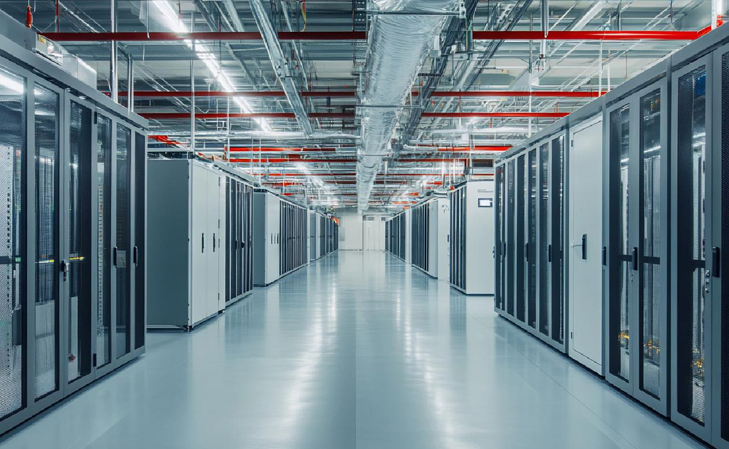
As AI reshapes the data world into a high-velocity, high-density ecosystem, colocation data center becomes the physical backbone that makes this transformation viable at scale.
Enterprises today are generating, processing and moving more data than ever before. AI models, real-time analytics, digital platforms and mission-critical applications are pushing traditional IT infrastructure beyond its limits. In this environment, terms like colocation, colocation services are often discussed, but not always clearly understood.
So what is colocation data center? How does it work? And why has it become such a critical part of modern enterprise infrastructure?
This blog breaks it down clearly, practically and in the context of today’s AI-driven data world.
What Is Colocation Data Center?
A colocation data center is a professionally managed facility where businesses place their own servers, storage and networking equipment, while the data center provider supplies the physical space, power, cooling, security and connectivity.
Instead of building and operating their own data center, enterprises “co-locate” their IT infrastructure inside a shared, purpose-built environment designed for reliability and performance.
How colocation differs from other models
- On-premise data centers require high capital investment, long build timelines and in-house operational expertise.
- Public cloud offers scalability but may limit control, predictability or compliance for certain workloads.
- Colocation sits between the two, offering physical control over infrastructure with enterprise-grade facilities and operational resilience.
In simple terms, colocation allows organizations to focus on their applications and data while offloading the complexity of running a data center.
How Does a Colocation Data Center Work?
Colocation data centers operate on a shared-infrastructure model, designed to support multiple enterprises securely and efficiently. Here’s how it typically works:
- Space allocation
Customers lease space based on their needs. This can be ranging from individual racks to private cages or dedicated suites. - Power infrastructure
The facility provides redundant power feeds, UPS systems and backup generators to ensure continuous availability even during grid failures. - Cooling systems
Precision cooling systems maintain optimal temperature and humidity, supporting both traditional and high-density workloads. - Connectivity and interconnection
Colocation facilities offer access to multiple network carriers, internet exchanges and cloud on-ramps, enabling low-latency, high-bandwidth connectivity. - Security and operations
24/7 monitoring, access controls, surveillance and compliance frameworks ensure physical and operational security at all times.
This model delivers predictable performance, high availability and operational continuity, without the burden of owning and managing the facility itself.
Why Colocation Data Centers Matter More Than Ever
The relevance of colocation has grown sharply as enterprise workloads evolve.
Data volumes and velocity are rising
AI, analytics and digital platforms generate continuous data streams that demand reliable, always-on infrastructure.
Power and density requirements are increasing
Modern workloads, especially AI and compute-intensive applications, require higher rack densities and stable power environments that many legacy data centers cannot support.
Latency is now a business metric
Applications increasingly depend on proximity to users, clouds and networks. Colocation facilities act as strategic hubs within this ecosystem.
Compliance and resilience are non-negotiable
Industries such as BFSI, healthcare and digital services require secure, compliant and resilient environments that are difficult to maintain in-house at scale.
In short, colocation data centers enable enterprises to scale infrastructure in step with business growth, without compromising performance or control.
Colocation vs Cloud vs On-Premise: A Practical Comparison
Colocation is not a replacement for cloud or on-premise infrastructure; it complements both.
- Control:
Colocation offers physical control over hardware, unlike public cloud. - Scalability:
Faster and more flexible than building an on-premise data center. - Cost predictability:
More stable long-term costs compared to fluctuating cloud usage. - Performance:
Ideal for latency-sensitive and high-performance workloads. - Compliance:
Easier to meet data residency and regulatory requirements.
Most enterprises today adopt hybrid architectures, where colocation forms the stable core connecting on-premise systems and cloud platforms.
Who Uses Colocation Data Centers?
Colocation is widely adopted across sectors, including:
- Financial services: for regulatory compliance and low-latency operations
- SaaS and digital platforms: for scalable, always-available infrastructure
- Enterprises running AI and analytics: for high-density, performance-driven workloads
- Media, gaming and streaming: for bandwidth-intensive applications
- Industries with sensitive data: requiring secure, controlled environments
What unites these use cases is the need for reliability, scalability and operational certainty.
Key Benefits of Colocation Data Centers
- High availability and uptime
- Scalable infrastructure without capital-heavy builds
- Enterprise-grade physical and operational security
- Rich network ecosystems and cloud connectivity
- Faster deployment and expansion
These benefits make colocation a strategic infrastructure decision, not just an IT one.
How to Choose the Right Colocation Data Center Provider
When evaluating a colocation partner, enterprises should consider:
- Power capacity and density support
- Cooling efficiency and future readiness
- Connectivity options and carrier neutrality
- Security standards and compliance certifications
- Flexibility to scale as workloads evolve
The right provider should align with both current requirements and long-term infrastructure strategy.
NES DATA: Enabling Enterprise-Ready Colocation Infrastructure
NES DATA delivers secure, scalable and high-performance colocation data center services designed to support modern enterprise workloads.
Beyond providing space and connectivity, NES DATA focuses on creating operationally resilient colocation environments that meet the performance, availability and compliance expectations of today’s data-driven businesses. Its facilities are built to support high-availability infrastructure, diverse network ecosystems and evolving workload requirements without compromising security or reliability.
With professionally managed operations, robust physical security and scalable capacity, NES DATA enables enterprises to place critical infrastructure in an environment purpose-built for continuity and growth. This allows organizations to focus on applications, data and innovation while NES DATA ensures the infrastructure foundation remains stable, secure and ready to scale.
By combining enterprise-grade colocation services with operational excellence, NES DATA empowers organizations to deploy and run mission-critical workloads with confidence today and into the future.
Conclusion
Colocation data centers have evolved from simple hosting facilities into critical enablers of the modern digital economy. As AI accelerates data creation and increases infrastructure demands, colocation provides the physical foundation that allows enterprises to scale intelligently, securely and sustainably.
Understanding what colocation is and why it matters, is no longer optional. It is a strategic requirement for organizations navigating the future of data-driven business.
FAQs
1. What is a colocation data center in simple terms?
A colocation data center is a secure facility where businesses install their own servers while the provider supplies power, cooling, connectivity, and physical security. It offers the reliability of a professional data center without the cost of building one.
2. What is the difference between colocation and cloud?
Colocation gives physical control over your own hardware with predictable costs and low latency, while cloud provides virtual resources on demand. Many enterprises use both together, with colocation as a stable core for hybrid IT infrastructure.
3. Why should enterprises choose NES DATA for colocation data center services?
NES DATA provides enterprise-grade colocation data center services with high availability, robust security, scalable power, and rich interconnection ecosystems. This allows businesses to run mission-critical workloads with predictable performance while focusing on applications, innovation, and growth instead of facility management.
4. Why is a colocation data center important for modern enterprises?
Colocation data centers deliver scalable, secure, and always-available infrastructure required for AI, real-time analytics, and digital platforms. They reduce capital investment, improve performance, and provide the resilience needed for today’s data-driven business operations.
5. Is NES DATA colocation suitable for regulated industries?
NES DATA supports compliance-driven sectors by offering secure access controls, monitored environments, and operational reliability. This helps organizations in BFSI, healthcare, SaaS, and digital services meet data protection, audit, and business continuity requirements.