
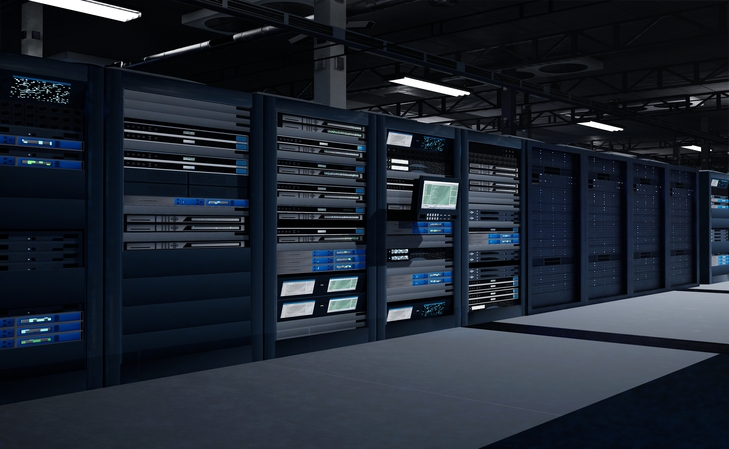
As enterprises modernize their IT environments to support cloud, AI, real-time analytics, and high-availability applications, the limitations of traditional on-premise infrastructure are becoming increasingly evident. While public cloud adoption continues to grow, many organizations still require the control, performance, compliance, and security of dedicated infrastructure. This is where managed colocation emerges as a strategic solution, combining the ownership of hardware with expert-led operations inside a carrier-neutral, high-availability data center.
Understanding What is Managed Colocation
Managed colocation is a data center service model in which businesses place their servers and IT equipment within a third-party facility while the provider manages the day-to-day operations, monitoring, maintenance, and support.
It goes beyond traditional server colocation, where the responsibility for managing infrastructure remains with the enterprise.
In simple terms:
- You own the infrastructure
- The provider runs and maintains it for you
This hybrid approach delivers the control of dedicated environments with the operational simplicity of a fully managed solution.
Why Managed Colocation is Gaining Adoption
For CIOs, CTOs, and IT leaders, infrastructure decisions are no longer just technical. They are business-critical.
Managed colocation addresses key enterprise challenges:
- Rising operational complexity
- 24×7 uptime expectations
- Shortage of skilled infrastructure teams
- Cost pressures on captive data centers
- Hybrid and multi-cloud integration
It enables organizations to focus on applications, innovation, and digital growth while the infrastructure is handled by experts.
Key Components and Benefits
Expert Management
The most defining advantage of managed colocation is access to a skilled, on-site operations team.
This typically includes:
- 24×7 infrastructure monitoring
- Remote hands support
- OS and firmware updates
- Patch management
- Incident response and troubleshooting
- Performance reporting
This transforms infrastructure from a resource-heavy responsibility into an SLA-driven service model.
Infrastructure & Security
Managed colocation facilities are purpose-built for mission-critical workloads and offer:
- Redundant power architecture
- Advanced cooling systems
- High-speed, low-latency connectivity
- Multi-layer physical security
- Access control and surveillance
- Compliance-ready environments
For sectors like BFSI, fintech, SaaS, and government, this ensures both performance and regulatory readiness.
Cost Efficiency
Building and operating a captive data center involves:
- High capital expenditure
- Real estate and energy costs
- 24×7 staffing
- Technology refresh cycles
Managed colocation converts this into a predictable OPEX-based model, eliminating:
- Infrastructure management overhead
- Spare inventory costs
- Downtime-related losses
The result is a significantly improved total cost of ownership (TCO).
Scalability Without Disruption
Digital growth is not linear and infrastructure must be able to scale accordingly.
Managed colocation allows organizations to:
- Expand rack space and power density
- Deploy new servers quickly
- Support high-density workloads
- Integrate with cloud environments
All without redesigning their operational model.
Improved Reliability and Business Continuity
High availability is not optional for modern enterprises.
With:
- Proactive monitoring
- On-site technical expertise
- Redundant systems
- SLA-backed uptime
Managed colocation ensures faster issue resolution and minimal service disruption.
How It Fits into a Managed Services Portfolio
For enterprises adopting hybrid IT, managed colocation becomes a foundational layer within a broader managed services portfolio, supporting:
- Hybrid cloud enablement
- Disaster recovery environments
- Edge deployments
- Backup and archival infrastructure
- High-performance computing workloads
It provides the stability of physical infrastructure with the agility of service-driven operations.
Who Should Choose Managed Colocation?
This model is ideal for companies that:
- Require high performance and low latency
- Operate in regulated industries
- Want to exit captive data centers
- Lack 24×7 infrastructure management teams
- Are building hybrid cloud environments
- Need predictable infrastructure costs
For such organizations, managed colocation is not just a hosting strategy but a business continuity and digital transformation enabler.
Why Managed Colocation Matters in a Growing Data Economy
As data consumption accelerates, infrastructure must be:
- Scalable
- Secure
- Always available
- Operationally efficient
Managed colocation delivers all four, while allowing enterprises to retain full control over their IT assets.
Why Choose NES DATA for Managed Colocation
NES DATA delivers enterprise-grade managed colocation designed for high-availability, performance-driven, and compliance-sensitive workloads.
With:
- State-of-the-art data center infrastructure
- Carrier-neutral connectivity
- Scalable deployment models
- 24×7 expert support
- SLA-backed operations
NES DATA enables organizations to transition from infrastructure management to infrastructure advantage.
At NES DATA, we understand that though colocation delivers a reliable physical foundation, true resilience comes from expert management of your mission-critical systems. That’s where our managed services portfolio makes the difference, ensuring your infrastructure doesn’t just run, but thrives under constant vigilance.
It is not just about hosting servers; it is about building a future-ready digital foundation.
Conclusion
Managed colocation brings together the best of both worlds: the control of dedicated infrastructure and the efficiency of managed operations.
For enterprises navigating hybrid IT, rising data volumes, and mission-critical uptime requirements, it offers:
- Operational simplicity
- Financial predictability
- Enterprise-grade reliability
- Seamless scalability
Most importantly, it allows technology teams to shift their focus from managing infrastructure to driving innovation and business growth.
FAQs
1. What is managed colocation?
Data center colocation is a service where businesses place & operate their critical IT assets in a third-party data center facility that provides uninterrupted power, cooling, security and connectivity.
2. How is Managed Data Center different from colocation?
While colocation provides space and infrastructure, in a Managed Data Center, an add-on service is provided at an additional cost, which includes monitoring, maintenance, and operational hands-on support for your IT environment.
3. When should a business choose Managed Hosting?
Managed Hosting is ideal for organizations with a lean internal IT team that want to outsource the monitoring and management of their critical IT assets to an experienced DC or 3rd party service provider
4. What is the most important factor when choosing a colocation provider?
Uptime reliability, scalability, ecosystem connectivity, and SLA-backed services support are the most critical factors.
5. How does NES DATA ensure high availability for mission-critical workloads?
High availability at NES DATA is achieved through a combination of resilient infrastructure and operational excellence. The facilities are built with redundant power and cooling systems, supported by carrier-neutral connectivity for network reliability. Continuous monitoring, rapid incident response and on-site technical expertise ensure that potential issues are identified and resolved before they impact performance, enabling enterprises to meet strict uptime and business continuity requirements. Sources:
NES DATA Managed Infrastructure Services
Colocation vs. Modular Data Center