
In today’s fast-evolving digital landscape, edge computing infrastructure is not just a buzzword but a fundamental pillar for India’s future in technology. As Artificial Intelligence (AI), 5G networks, and the Internet of Things (IoT) scale rapidly across industries, traditional centralized cloud computing alone can’t deliver the performance, speed, and responsiveness required. Edge computing changes that by processing data closer to where it’s generated, at the network edge, reducing delays, boosting efficiency, and unlocking new use-cases that are reshaping business and society.
What Is Edge Computing Infrastructure?
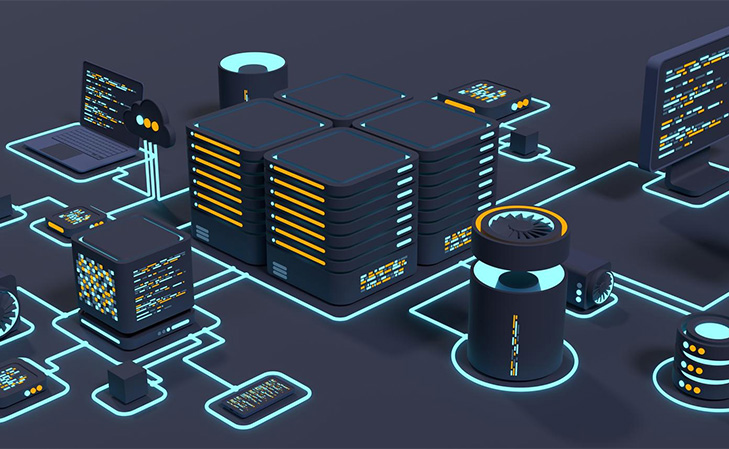
At its core, edge computing infrastructure refers to distributed computing resources, such as servers, storage and networking, positioned physically closer to end users and devices rather than in far-away centralized data centers. These edge nodes process and store data locally, significantly reducing the distance data must travel and the time it takes to act on it.
Modern edge infrastructure often includes AI edge solutions, specialized systems that combine local compute with intelligent analytics to support real-time decision-making for mission-critical applications. In tandem with 5G connectivity, this creates a virtuous tech ecosystem where speed, intelligence, and reliability converge.
The Latency Challenge and Why It Matters?
One of the biggest constraints on current cloud-centric architectures is latency: the time it takes for data to travel between the source, the cloud, and back. For many applications, even a few extra milliseconds can make the difference between success and failure.
5G technology promises ultra-low latency (often <10ms), but that promise can only be realized when data is processed nearby, instead of being routed to distant cloud centers.
Use-cases like autonomous transport, industrial robotics, telemedicine, and remote surveillance demand near-instant responses that only low latency data centers can deliver.
This is where edge infrastructure comes into play, by placing compute close to the user, it allows applications to process data in milliseconds rather than seconds.
The Synergy Between 5G and Edge
The deployment of 5G networks and edge computing infrastructure is deeply interlinked:
5G’s high bandwidth and ultra-fast speeds drive demand for localized compute.
Edge data nodes amplify 5G’s real-time capabilities by processing data where it’s generated.
This combination, often referred to as 5G edge data center architecture. unlocks powerful new opportunities, such as:
- Smart factories with robotic automation
- Real-time analytics in logistics and supply chains
- Immersive AR/VR applications
- Remote patient monitoring and telehealth
- Autonomous vehicles and connected mobility systems
According to industry forecasts, the India 5G edge computing market is poised for exponential growth, driven by enterprise adoption and telecom expansion.
Unlocking India’s AI Potential with the Edge
Artificial Intelligence thrives on data, but how that data is collected, moved, and acted upon determines the success of real-time AI applications.Enter AI edge solutions, which enable heavy AI workloads (especially inference) to run locally.
Local AI inference reduces latency and data transfer costs, preserves privacy, and enhances reliability, all critical factors for edge-driven innovation. This is vital for scenarios like facial recognition, predictive maintenance, and on-device analytics where every millisecond counts.
Edge computing also eases bandwidth pressure on core networks by filtering and processing data locally before sending only the most essential insights upstream.
India’s Unique Edge Opportunity
India’s digital transformation journey, across smart cities, digital governance, e-commerce, and enterprise digitalization, has created a massive appetite for low-latency, high-performance computing close to users. This is especially true given India’s demographic diversity and the rapid expansion of mobile internet adoption.

Here’s why edge infrastructure holds strategic value for India:
- Tier-2 and Tier-3 growth: Decentralized edge nodes enable digital services outside metropolitan centers, improving performance and inclusion.
- 5G readiness: Edge architecture is essential to realize 5G’s sub-millisecond responsiveness.
- AI expansion: Localized compute enables scalable, real-time AI adoption across sectors.
- Cost & bandwidth optimization: Reducing unnecessary data transfer reduces network load and total cost of ownership.
Together, these trends are transforming India’s tech ecosystem into a dynamic, resilient, and future-ready digital economy.
The Future of Edge: A Distributed Data Reality
Looking ahead, the edge is not just a support technology; it is becoming the foundation for a distributed digital infrastructure.
- Edge + AI + 5G = Real-Time Infrastructure: Localized processing will become the norm for real-time services, not just a luxury.
- Scalable Edge Ecosystems: Modular, scalable edge nodes will support diverse industries, from manufacturing and healthcare to entertainment and public safety.
- Edge Intelligence: The lines between edge compute, AI algorithms, and network optimization will blur, enabling self-learning, self-healing systems.
In this future, low latency data centers won’t just serve apps; they will orchestrate smart systems where decisions are immediate, context-aware, and adaptive.
Why Data Center Colocation Still Matters
While edge computing brings processing closer to users, data center colocation continues to play a vital role. Colocation facilities provide secure, highly connected, and resilient environments where enterprises can house their infrastructure, including edge nodes, while leveraging carrier neutrality, access to multiple network partners, and scalable power and cooling.
Today’s forward-looking IT teams often adopt hybrid strategies, combining centralized cloud, colocation, and distributed edge deployments, to balance performance, security, cost, and operational control.
NES DATA: Enabling India’s Edge-Powered Future
At a time when digital services define national competitiveness, NES DATA is positioned as a trusted partner in building resilient, agile, and AI-ready infrastructure solutions. Our offerings bridge the gap between centralized compute power and edge requirements, from colocation environments to edge data center implementations that support low-latency workloads and 5G-enabled applications.
By combining deep expertise with tomorrow-ready technologies, NES DATA helps enterprises unlock real-time insights, accelerated performance, and seamless scalability, powering India’s journey toward an AI-driven, low-latency digital future.
Frequently Asked Questions (FAQs)
1. What exactly is edge computing infrastructure?
Edge computing infrastructure consists of distributed compute, storage, and networking resources located near users and devices to process data locally, reducing latency and improving responsiveness.
2. How does edge computing help 5G networks?
Edge infrastructure brings computing closer to users, allowing 5G networks to deliver on their low-latency, high-bandwidth promises for real-time services.
3. Why is edge important for AI applications?
AI workloads, especially inference, require real-time data processing. Edge computing enables faster insights, reduced data transfer costs, and enhanced privacy.
4. Can edge computing work with centralized cloud systems?
Yes, hybrid models that combine edge, central cloud, and colocation give enterprises optimal performance, cost management, and flexibility
5. Which industries stand to benefit the most from edge computing?
Manufacturing, healthcare, transportation, smart cities, gaming, and any sector with latency-sensitive workloads benefit significantly from edge infrastructure.
Sources: